
6 January 2026. Dan Jones is the only person in the world who would send me a present for Richard II’s 659th birthday. What a friend. What a present.
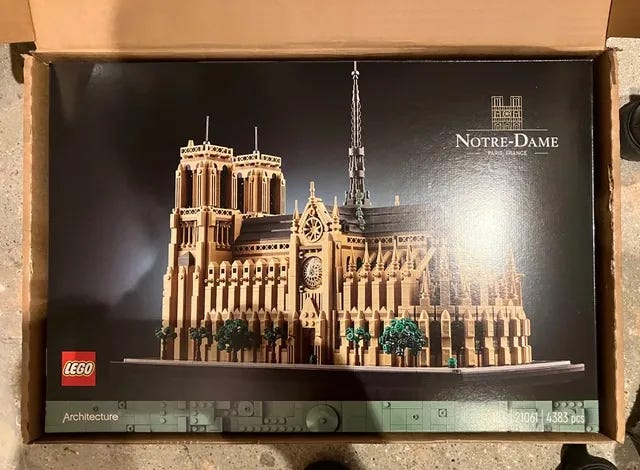
It’s too good not to share.
So please join me in this occasional series from the construction front-line as we set about BUILDING NOTRE-DAME.
It’s 1185. Maurice de Sully, bishop of Paris, is in his mid-sixties. More than two decades after the foundation stone of his new cathedral of Notre-Dame was laid, much has changed.
Louis VII, the king who oversaw that holy ceremony, has been dead for five years. His twenty-year-old son Philippe II – the boy hailed at his birth as Dieudonné, given by God – now rules France.
Back then, Pope Alexander III blessed the building’s beginning. Now another honoured guest celebrates mass in Notre-Dame’s glorious new choir: Heraclius, patriarch of Jerusalem.
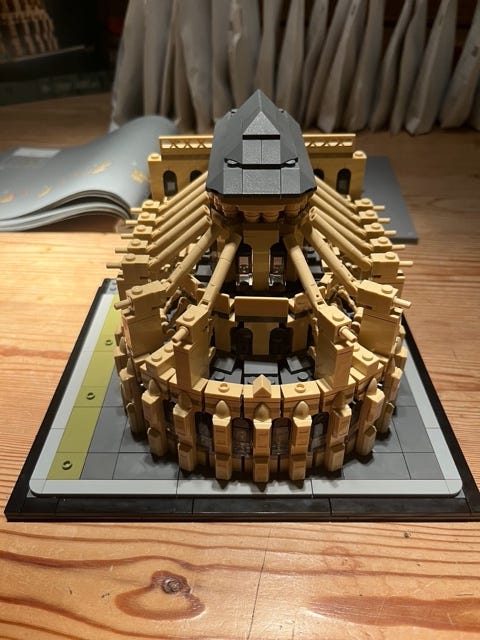
The patriarch is a Frenchman a few years Maurice’s junior, whose office in the holy city gives him precedence over all bishops and archbishops in Europe. He has come to Paris on a sacred mission. Accompanied by the Grand Masters of the Knights Hospitaller and Templar, he’s seeking help for the Latin kingdom of Jerusalem, which is in crisis over the succession of a child-king, Baldwin V, and under attack from the Ayyubid forces of the great sultan Saladin.
Though Heraclius is lavishly entertained by young Philippe II in Paris and by Henry II in London – where the patriarch consecrates the Templars’ new Temple Church – he fails to persuade either king to return with him to the east.
Two years later, Saladin conquers Jerusalem. Two years after that, a crusade is launched to recapture it. The resources of France, including vast amounts of money and Bishop Maurice’s time and attention, are consumed by the campaign.
Still, behind the temporary wall that separates Maurice’s chancel from the construction site beyond, the craftsmen and labourers do not lay down their tools.
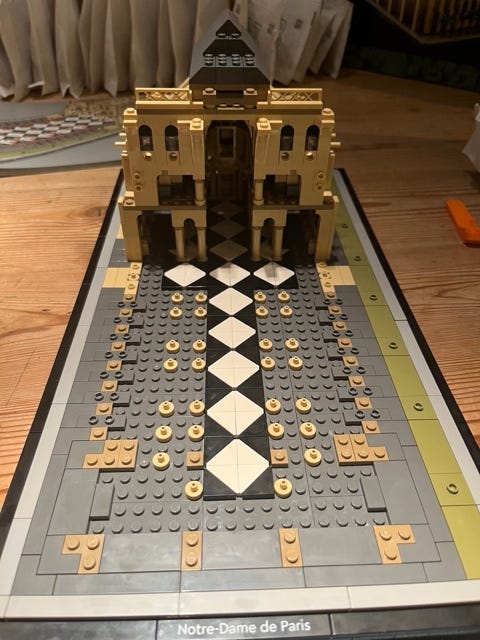
They are building from east to west.
First comes the transept, the arms of the cross formed by the church’s floorplan.
At each end of the transept a great door rises, one to the south, one to the north.
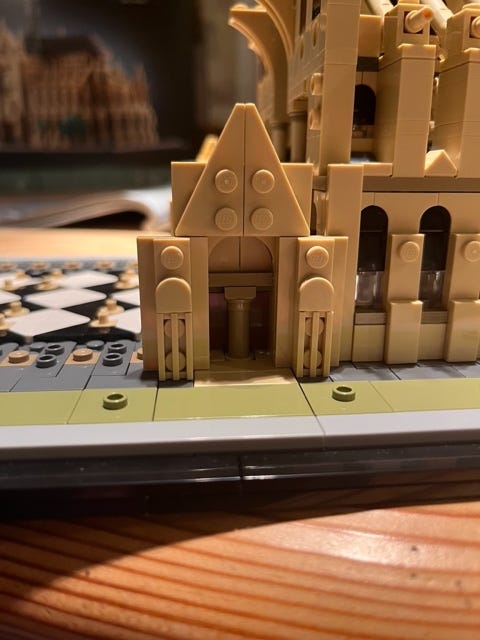
The open space of the transept spans the full 157-foot width of the building.
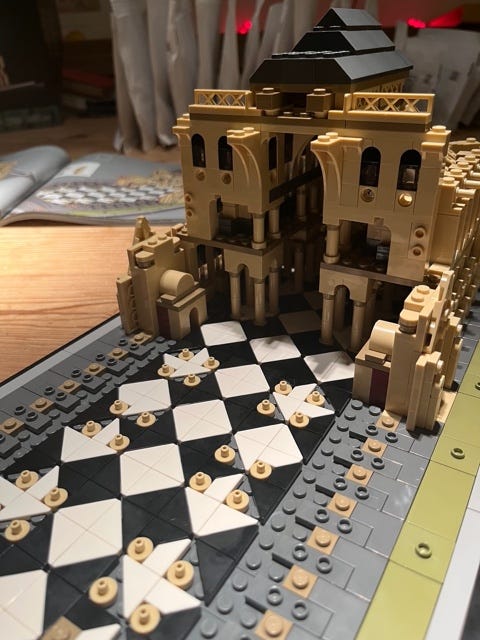
Next come the walls of the nave, the vast space where, in years to come, the faithful will gather to worship.
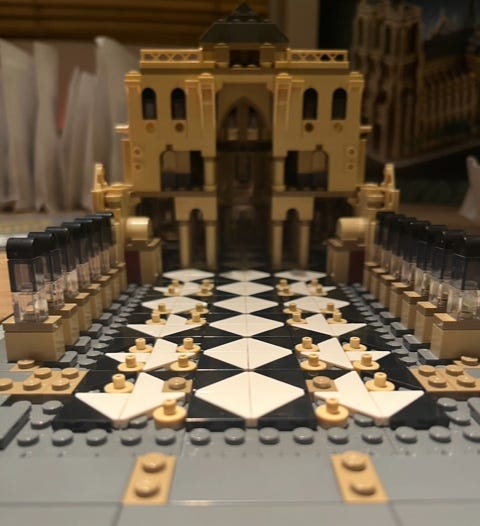
Like the chancel, the nave has double aisles, with two rows of supporting columns on each side.
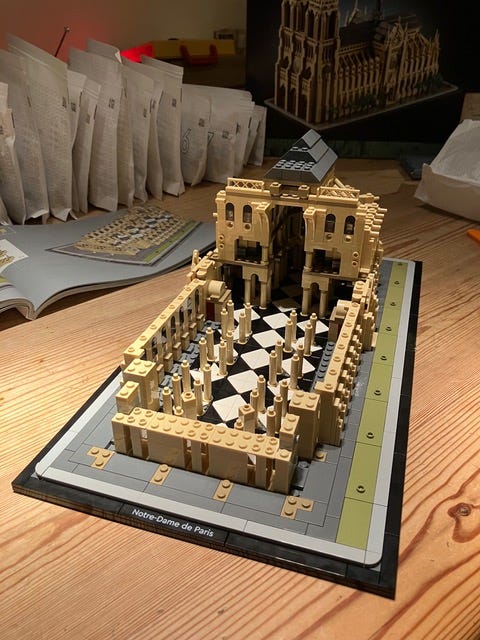
Since they built the chancel, however, the masons have been refining their technique.
They are learning how to alternate massive circular pillars with narrower columns that are supported and enhanced by still smaller columns – colonnettes – clustered into a more complex shape. And the carved stone leaves that curl around the capital of each pillar are finer, more elegant, more like their models in nature.
But as the church grows, Bishop Maurice fades.
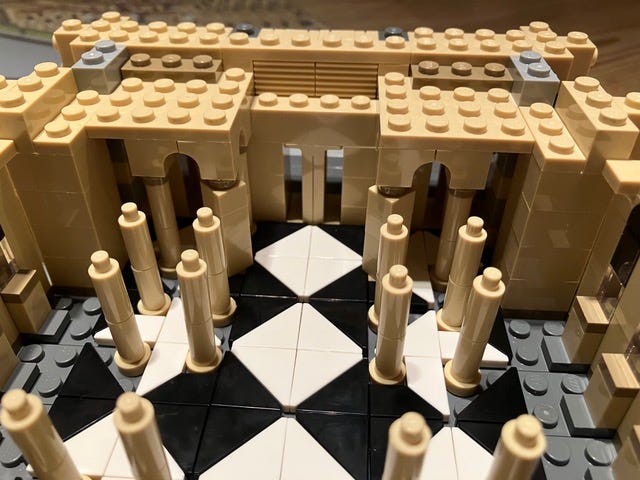
By the mid-1190s, the nave is more than 195 feet long. Foundations are dug for a west façade with three great doors through which the people of Paris will enter their cathedral.
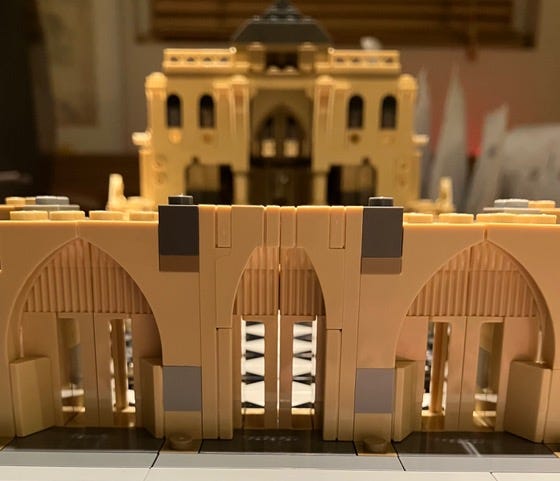
By then, Bishop Maurice is in his mid-seventies. In 1196 he dies.
In his will, he leaves 100 livres towards the cost of the lead that will cover his cathedral’s roof.
By remarkable coincidence the next bishop of Paris, Eudes de Sully, comes from the same village on the Loire as his predecessor – although not from the same kind of family. This bishop is a nobleman, blue-blooded and wealthy. But, along with his see, he inherits Maurice’s unsparing commitment to Notre-Dame.
Under Bishop Eudes’s supervision, six-part vaults soar in stone from the columns of the nave.
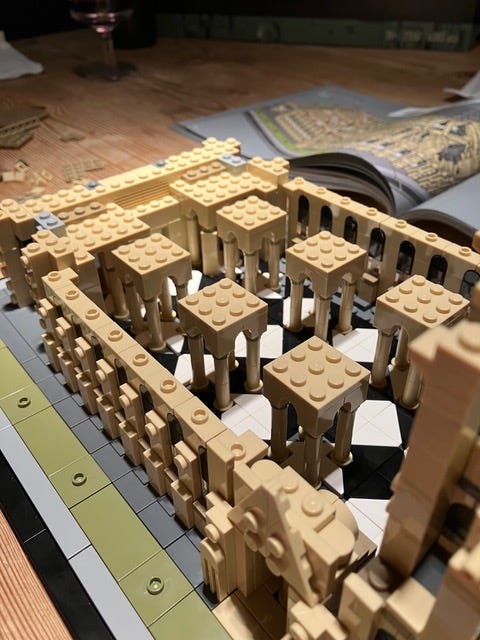
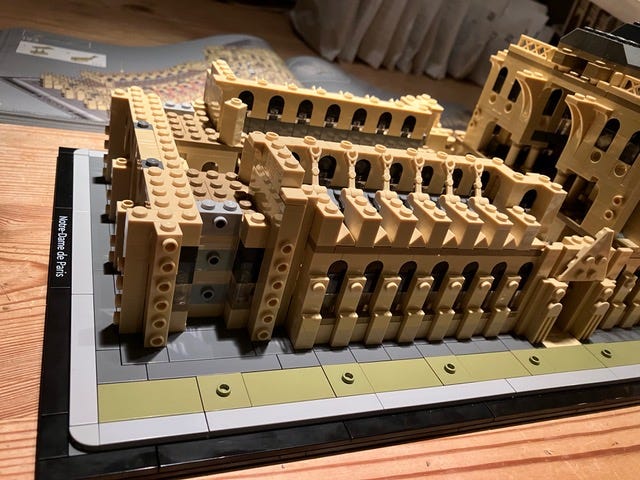
Above them rise arcaded galleries, supported from outside by flying buttresses in precise and elegant ranks.
And then, like two great eyes, a rose window is built at the south end of the transept, and another at the north.
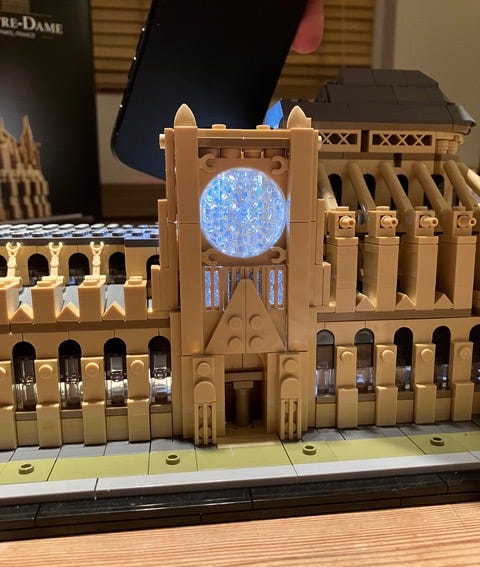
In just four decades, the two bishops from Sully have made Notre-Dame a reality.
Still, as the twelfth century gives way to the thirteenth, there is yet more work to be done.
Adieu - a Dieu - Bishop Maurice! You began a great work. Love seeing the walls rise and the rose windows take their place 🙏
It’s coming along beautifully. (Dates need changing halfway through, I was so confused!)