
6 January 2026. Dan Jones is the only person in the world who would send me a present for Richard II’s 659th birthday. What a friend. What a present.
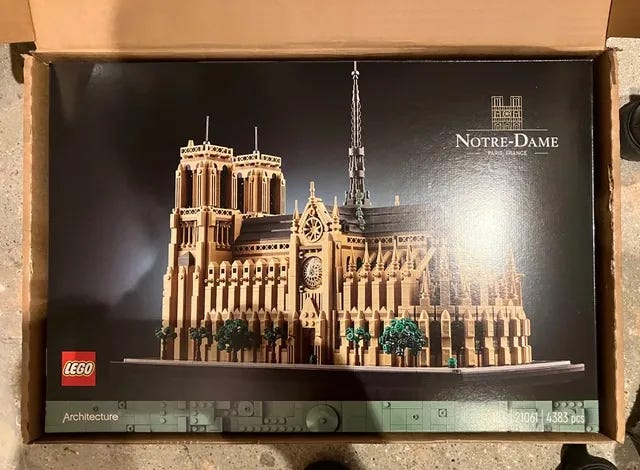
It’s too good not to share.
So please join me in this occasional series from the construction front-line as we set about BUILDING NOTRE-DAME.
It’s 1160. You’re Maurice de Sully, a poor boy who’s risen to become the new bishop of Paris.
You take charge of your cathedral: a basilica dedicated to St Étienne that has stood on the Île de la Cité for at least six eventful centuries, and a newer church of Our Lady beside it.
But you know that, a little more than six miles north, a breathtaking new church is taking shape at the abbey of Saint-Denis, the necropolis of the French kings. There the great Abbot Suger, before his death in 1151, has overseen the construction of a west front for the nave and a choir to the east in an extraordinary new architectural style. It has pointed arches, soaring vaults, narrow pillars and luminous stained-glass windows, through which light streams into a building that seems to reach for heaven. (One day – even though the Goths have nothing to do with it – the style will be known as Gothic.)
You’re determined to bring this new light of faith to Paris, to the Île de la Cité.
You raise cash from as many donors as you can lean on. You tear down houses to make a new road for the cartloads upon cartloads of stone your craftsmen will need. You find a master mason who understands how to build your vision.
By 1163, you’re ready.
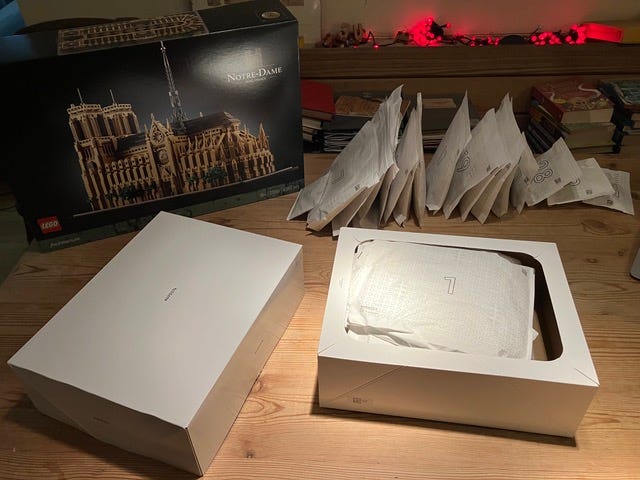
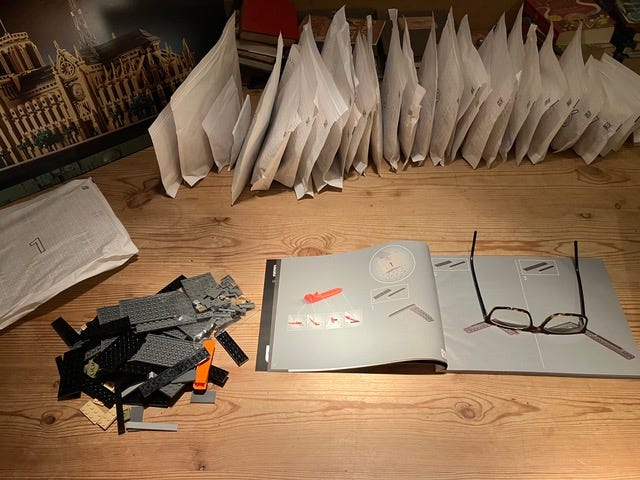
For our purposes, imagine that Dan is part-Suger, all-donor, without whom none of this would be happening. I’m sort-of-Sully (I cleared the dining table and opened the box), sort-of-semi-skilled labour. Master mason overseeing the work is my son Luca, many of whose almost-twenty-four years have been spent racing through complex construction projects (I’ll see if I can dig out a photo of the Death Star on its way to becoming fully operational).
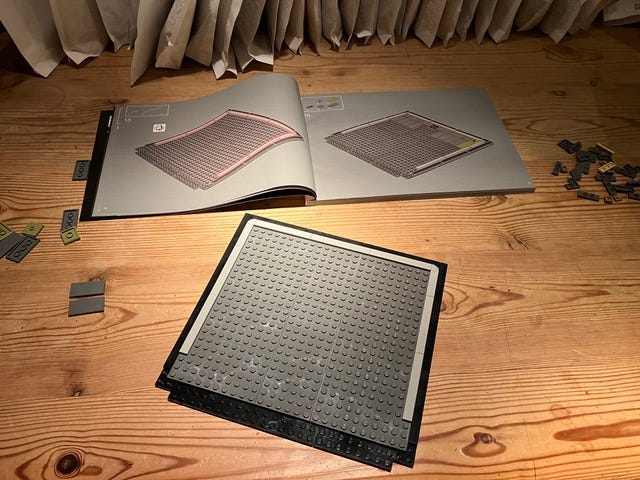
In the spring of 1163, the greatest figures of Church and state gather at the building site. King Louis VII of France is there. (Nineteen years earlier he attended the consecration of the new basilica at Saint-Denis with his wife and queen, Eleanor of Aquitaine. Since then, she has left him, and France, to become queen of England.)
Also present is Pope Alexander III. The pope finds himself in Paris because a disputed papal election has left a rival pope, Victor IV, in charge in Rome. The silver lining of this exile is that he can bless the laying of the first stone of the new cathedral of Notre-Dame.
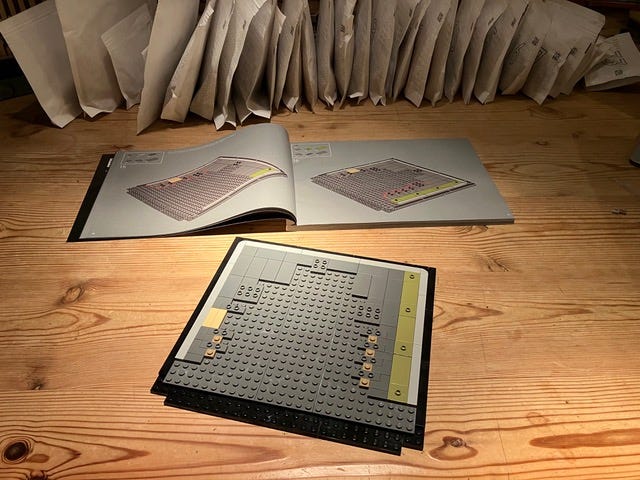
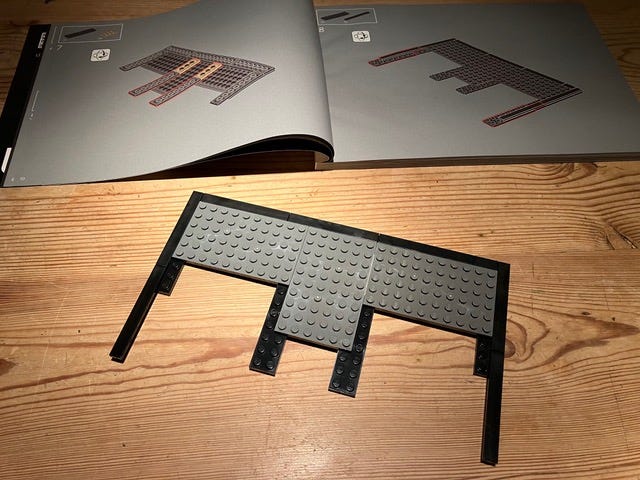
The first part of the church to be laid out – on top of foundations thirty feet deep, filled with hard stone from the quarries of Montrouge just south of the city – is the chancel.
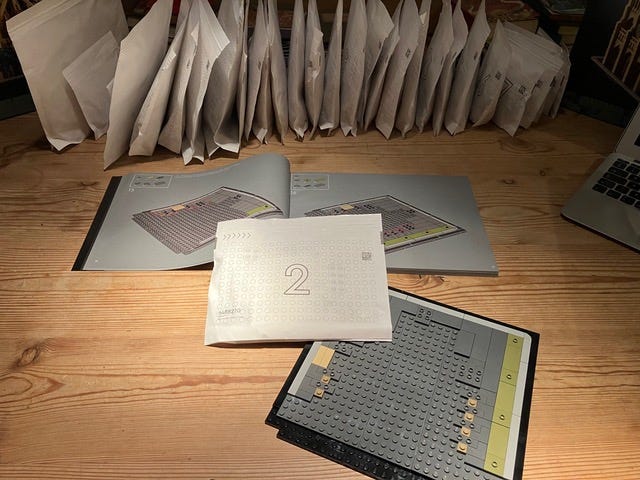
The bishop’s plan is that this magnificent section of his cathedral, where mass will be celebrated at the high altar, should function by itself as a mini-church while the nave rises alongside it.
It won’t be very mini, however. The chancel will be 170 feet long and 157 feet wide, with a vaulted roof springing more than 100 feet into the air.
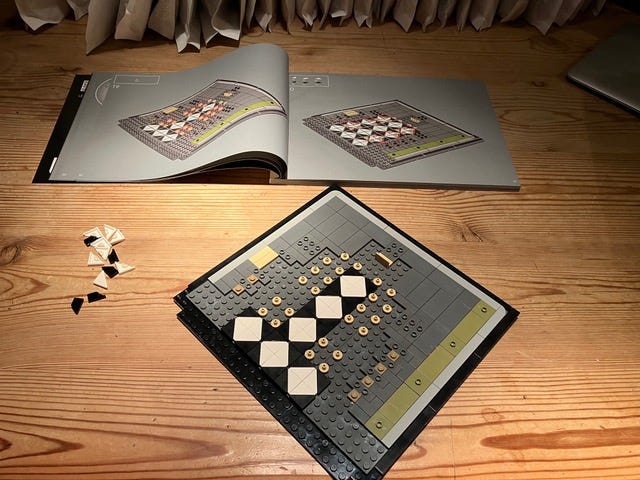
It will be made up of two parts: the choir leading to the high altar and, behind the altar, a chevet – that is, an apse containing an ambulatory and a series of chapels set in bays.
(In case that doesn’t help much, an apse is a semicircular structure at the end of a church, and an ambulatory is a pavemented walkway – in this case, an aisle sweeping in a curve around the back of the high altar. Luckily for me, my architectural plans are almost all in pictures.)
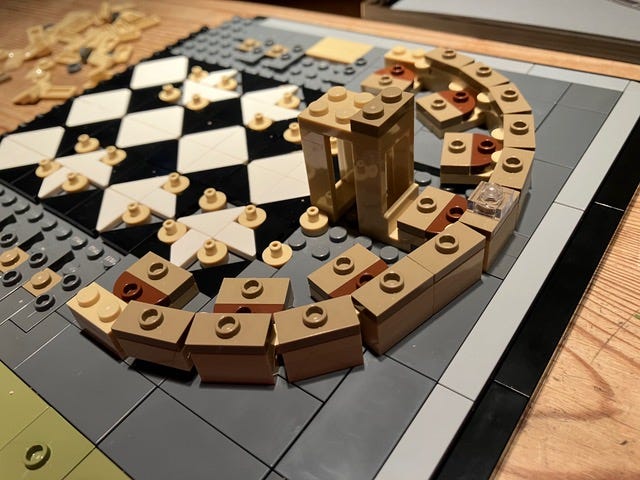
To lay out this floor plan, ropes of different lengths are attached to a stake at the centre of the building and circles of different sizes marked out.
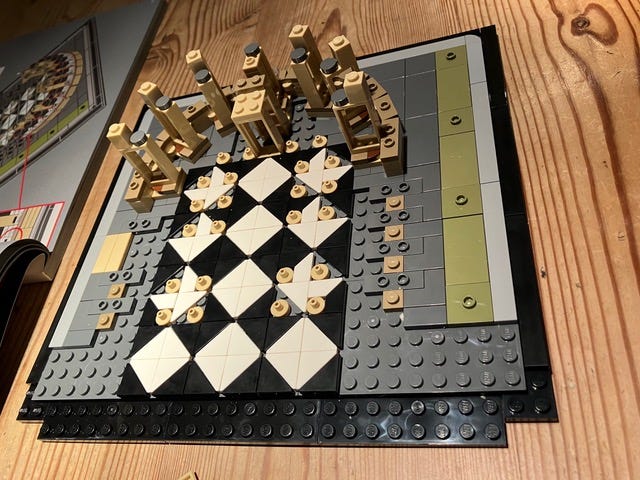
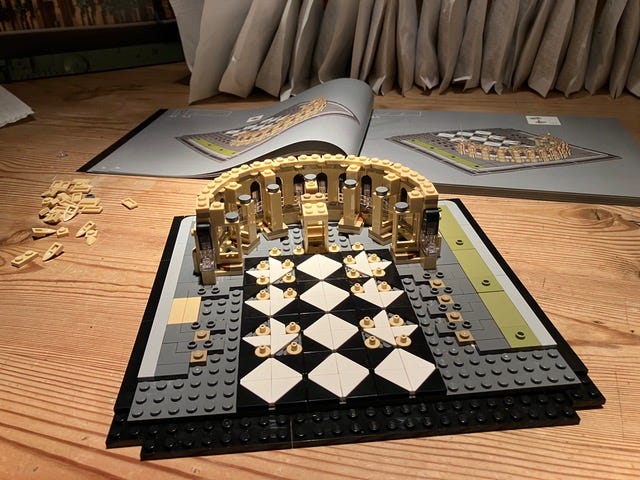
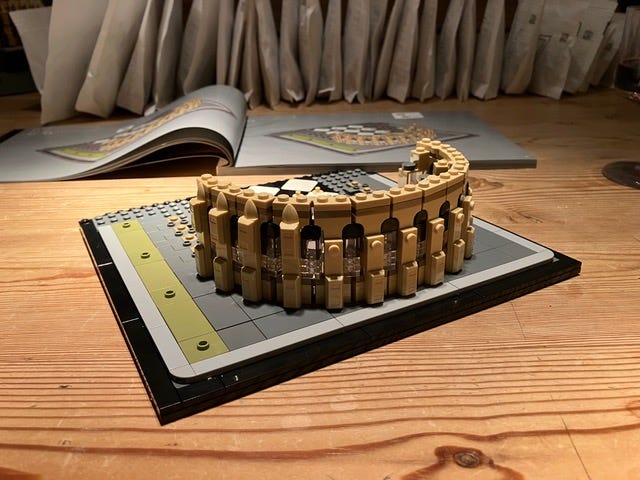
Heaven seems to be smiling on Bishop Maurice, King Louis, and the kingdom of France. Two years after the cornerstone of Notre-Dame is laid, Paris erupts in jubilation at the birth of a son and heir, at last, to the 45-year-old king and his third wife Alix of Champagne. While building continues, the baby is given the name Philippe Dieudonné – ‘given by God’.
Next time: the dazzling interior of the chancel takes shape . . .
Excellent gift, way to go Dan! This is really going to be interesting - the cathedral is amazing but I’m really looking forward understanding how it was built.
Lego is my nightmare, but both the premise and execution of this is delightful. (I’m a sucker for second-person storytelling when done well….)